
DTF · Guide
DTF transfers on the TagTales tag
Direct-to-film gives you full colour with a white base, so photos and pastel designs work as well as bold names. On fleece, the trick is a short pre-press and a second press for durability.
At a glance
- Temperature
- 150–160°C
- First press
- 10–15 seconds
- Pressure
- Medium
- Peel
- As your film specifies
- Second press
- 5–10 seconds
- Design size
- Up to 7.5 x 5cm
Starting points, not gospel. Follow your ink, film, vinyl or thread maker's instructions and test one tag first.
DTF sits on top of the fabric rather than inside it, which is why it can carry white and light colours that sublimation cannot. On the fleece tag that makes it the go-to for pastel nursery designs, photos and anything with a white element.
Step by step
-
Size and cut the transfer
Trim the transfer to the design plus a small margin. Keep the design within 7.5 x 5cm so it clears the stitched edge and the grommet.
-
Pre-press the tag
Lint roll the fleece, then pre-press for 3–5 seconds under parchment. This flattens the pile and removes moisture so the adhesive can bond to the fibres rather than sit on top of them.
-
Position and tape
Place the transfer print side down on the fleece and tape one edge. Tuck the cord out of the way. Let the plush body hang off the front of the lower platen, or use a mini press, so only the tag is under the plate.
-
First press
Cover with parchment and press at 150–160°C for 10–15 seconds at medium pressure. Follow your film maker's numbers if they differ; DTF films vary more than sublimation paper does.
-
Peel
Peel according to your film: cold peel films need to cool fully, warm peel films come off after a few seconds. Peel low and slow, holding the tag flat so the fleece does not stretch.
-
Second press
Cover with parchment again and press for 5–10 seconds. This sets the adhesive into the fleece, improves wash and wear durability, and gives a matte finish.
Tips from the bench
- The pre-press matters more on fleece than on a T-shirt. Skip it and the transfer can lift at the edges.
- Medium pressure, not heavy. Fleece compresses, and too much pressure squeezes adhesive out around the edge of the design.
- For a softer hand-feel, keep large solid areas to a minimum and use a slightly higher second-press time.
- Fleece stretches. Peel with the tag supported flat rather than lifting the tag and film together.
- Gang sheets work well here: fifteen small designs on one sheet, one per character, cut down as you go.
Questions
Will DTF stick to fleece?
Yes, reliably, provided you pre-press to flatten the pile and finish with a second press. The tag is a flat, low-pile fleece, not a deep plush.
Can I put a photo on the tag?
Yes. DTF prints a white underbase, so photos and light colours show correctly on the white fleece. Keep the image simple and well-lit at this size.
Cold peel or warm peel?
Whichever your film is made for. If you are unsure, cold peel is the safer choice on fleece because the fleece has fully relaxed before you lift the film.
How durable is it?
With the second press, DTF on the tag stands up to normal handling and spot cleaning. It is not designed for repeated machine washing, and neither is a weighted plush.
Try it on
Characters to practise with
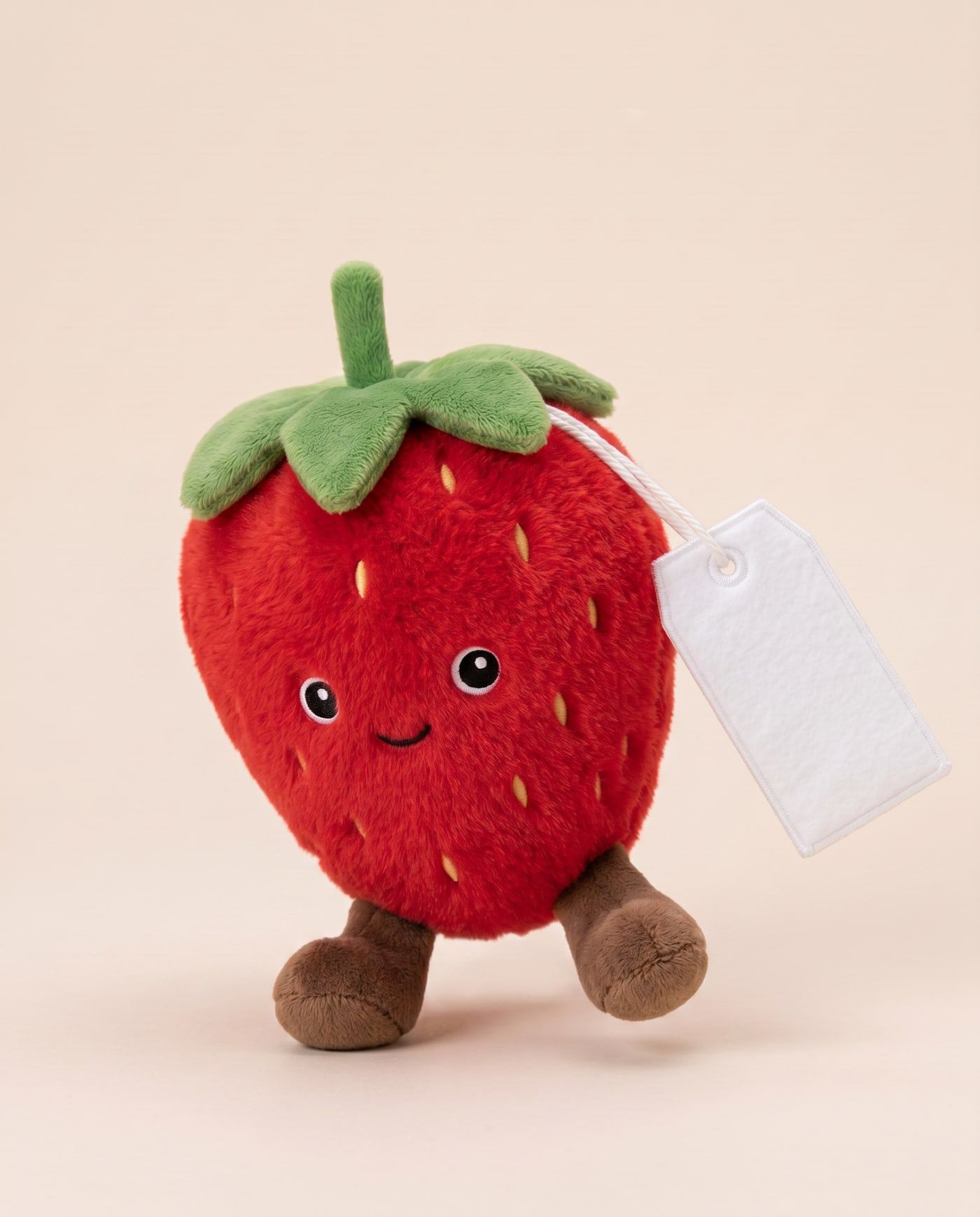
Stevie the Strawberry
Meet Stevie – deep red plush dotted with embroidered seeds and topped with a leafy green crown.
Meet Stevie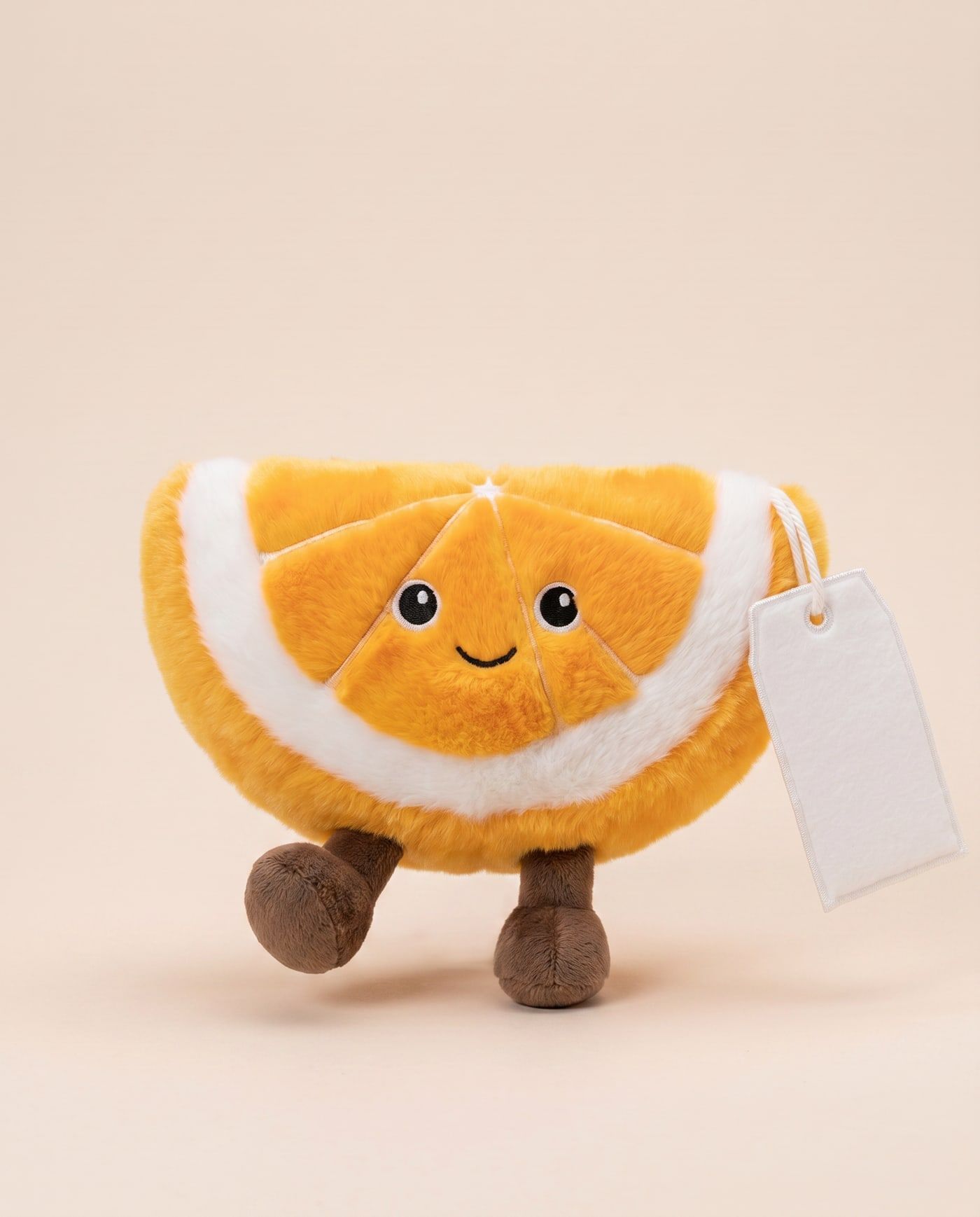
Ollie the Orange Slice
Meet Ollie – half an orange, all personality.
Meet Ollie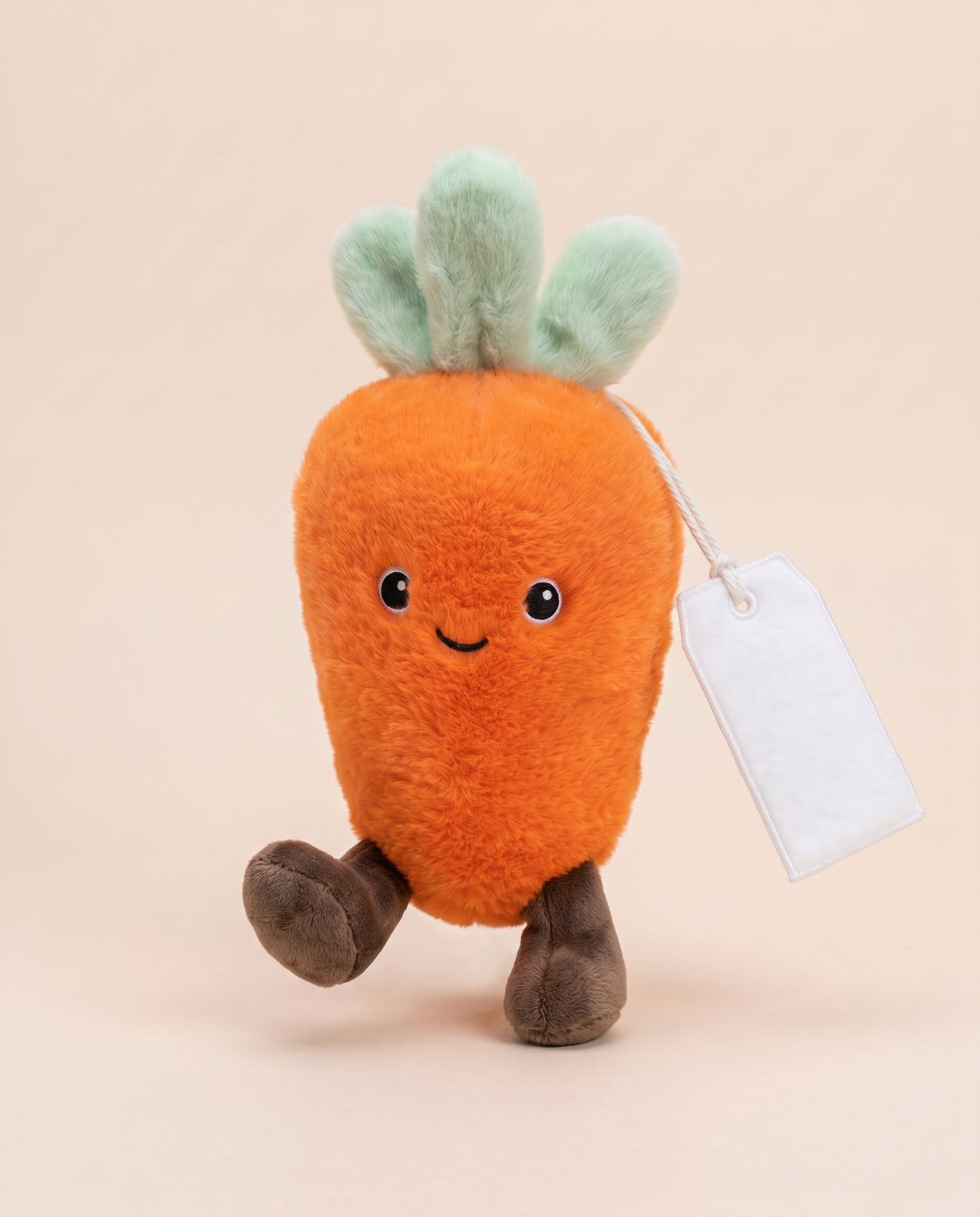
Charlie the Carrot
Meet Charlie – tall, bright orange, and topped with the fluffiest green leaves on the shelf.
Meet Charlie